


Over 80% of young adults say their clothing directly reflects their identity and beliefs, and in streetwear and cannabis culture, graphics are the loudest part of that statement. A graphic tee isn’t decoration. It’s a declaration. This article breaks down the psychology, color science, and cultural mechanics behind why graphics hit different for people who move through the world with intention. Whether you’re building a wardrobe from scratch or refining your signature look, you’ll walk away knowing exactly how to use graphics to say what words can’t.
Table of Contents
- Why graphics matter in expressing identity
- Color psychology and graphic styles: What the data reveals
- Layering meaning: How graphics create personal and collective identity
- Collabs, icons, and legends: Graphics as cultural currency
- How to choose graphics that reflect your authentic self
- Why being intentional with graphics changes the game
- Ready to express your identity? Shop unique graphics now
- Frequently asked questions
Key Takeaways
| Point | Details |
|---|---|
| Graphics signal identity | What you wear visually communicates who you are and the culture you associate with. |
| Color shapes emotion | Choosing the right colors can influence trust, excitement, and purchase intentions. |
| Community through graphics | Shared symbols and motifs foster a sense of belonging and cultural connection. |
| Collabs boost meaning | Brand and artist collaborations deepen the story and appeal of streetwear graphics. |
| Intent beats trends | Expressing your authentic vibe matters more than chasing what’s currently popular. |
Why graphics matter in expressing identity
Fashion has always been a language. But in streetwear and cannabis culture, graphics turn up the volume on that conversation in ways that plain garments simply can’t match. When you throw on a tee with a bold motif or a strain-specific design, you’re not just getting dressed. You’re broadcasting your values, your tribe, and your energy to everyone in the room.
Research confirms what most of us already feel. Graphics negotiate personal aspirations against social expectations, activating emotions like belonging, rebellion, and confidence all at once. That’s a lot of work for a single piece of cotton. But that’s exactly why the right graphic hits so hard when it connects.
“The most powerful graphics don’t just represent a brand. They represent a worldview. When your fit resonates with someone across the room, that’s identity doing its job.”
Here’s what graphics actually do for you in this scene:
- Signal your tribe instantly, no introduction needed
- Communicate your philosophy or mood without saying a word
- Create emotional anchors that make certain pieces feel irreplaceable
- Tap into FOMO and scarcity when limited drops drop, deepening attachment
- Bridge you into conversations, crews, and communities that share your vibe
The O.G. KUSH Unisex T-shirt is a clean example of how a strain-specific graphic carries instant recognition for anyone who knows. It’s not just a shirt. It’s a handshake.
Color psychology and graphic styles: What the data reveals
Graphics don’t work alone. Color is the emotional amplifier that makes a design land or fall flat. And the data on this is sharper than most people realize.
A Gen Z survey (n=100) found that blue drives trust at 40.4% and red drives excitement at 32.7% among young consumers. Neutral tones quietly boost purchase intent by making designs feel wearable across more contexts. These aren’t random preferences. They’re wired into how we process visual information.
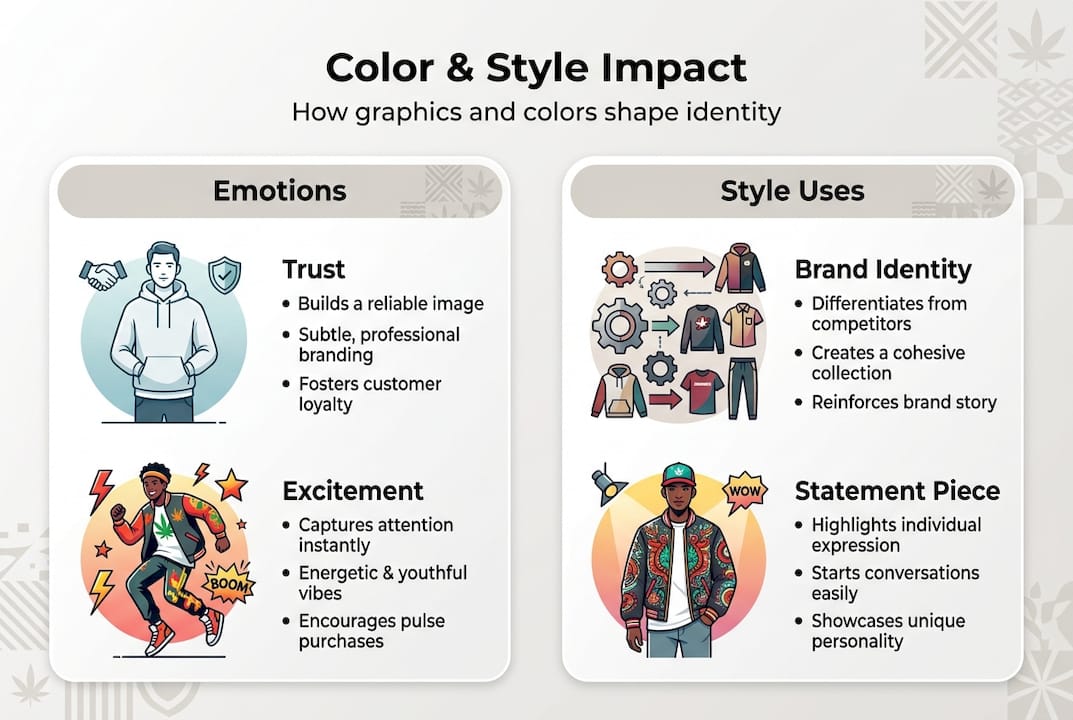
| Color/Style | Primary emotion | Best use case | Loyalty impact |
|---|---|---|---|
| Blue | Trust, calm | Brand identity, logo-forward tees | High long-term loyalty |
| Red | Excitement, urgency | Statement pieces, limited drops | High initial hype |
| Neutrals (black, gray, olive) | Versatility, intent | Everyday staples, layering | Strong long-term wear |
| Graphic-heavy | Energy, tribal signal | Event fits, bold statements | High short-term attachment |
| Minimalist | Subtlety, sophistication | Daily rotation, mix-and-match | Best long-term loyalty |
The graphic-heavy vs. minimalist split is real. Bold, complex designs drive initial hype and sell fast. But minimalist pieces with clean, intentional graphics tend to stay in rotation longer and build deeper loyalty over time. You need both in your wardrobe if you want range.
Here’s a practical framework for using color in your graphic choices:
- Lead with your message. If you want to project calm authority, anchor your palette in blues and blacks.
- Use red and high-contrast combos for pieces you want to make a scene. The OG KUSH BLK/GRN T-shirt nails this with contrast that pops without screaming.
- Add neutrals to balance. A graphic-heavy tee pairs better with neutral bottoms and accessories, letting the design breathe.
- Match color energy to context. A festival fit hits different than a low-key session with your crew.
Pro Tip: When building a capsule wardrobe around graphics, pick one bold statement piece and two neutral-anchored designs. That ratio gives you flexibility without losing your identity signal. The CHEM DAWG Unisex T-shirt is a strong neutral-forward option that still carries serious graphic weight.
Layering meaning: How graphics create personal and collective identity
Color sets the tone. But the actual graphic, its motif, its reference, its symbolism, is where your personal story lives. This is where streetwear and cannabis culture get genuinely interesting as a creative space.
Graphics let you layer personal narratives onto your fits. A leaf motif signals chill energy and cultural alignment. A raised fist signals activism and resistance. Bold philosophical type signals that you think deeper than your average consumer. These aren’t arbitrary choices. They’re a visual autobiography.
“In cannabis streetwear, the graphic is the conversation starter. It tells people what you’re about before you open your mouth.”
What makes this scene especially rich is that you can stack signals. One fit can communicate multiple identities simultaneously. Here’s how that plays out in practice:
- Strain-specific graphics connect you to a subculture with shared knowledge and preference
- Philosophical or text-based designs signal intellectual depth and intentionality
- Activist motifs communicate values and political alignment
- Vintage or heritage references show cultural awareness and respect for lineage
- Abstract or psychedelic patterns express creativity and openness
The SOUR DIESEL BLK/GRN T-shirt layers strain recognition with a clean colorway, hitting both the cultural insider signal and the aesthetic appeal simultaneously. The WEED KILLER Unisex T-shirt plays with wordplay and graphic tension, which is exactly the kind of layered meaning that gets people asking questions.
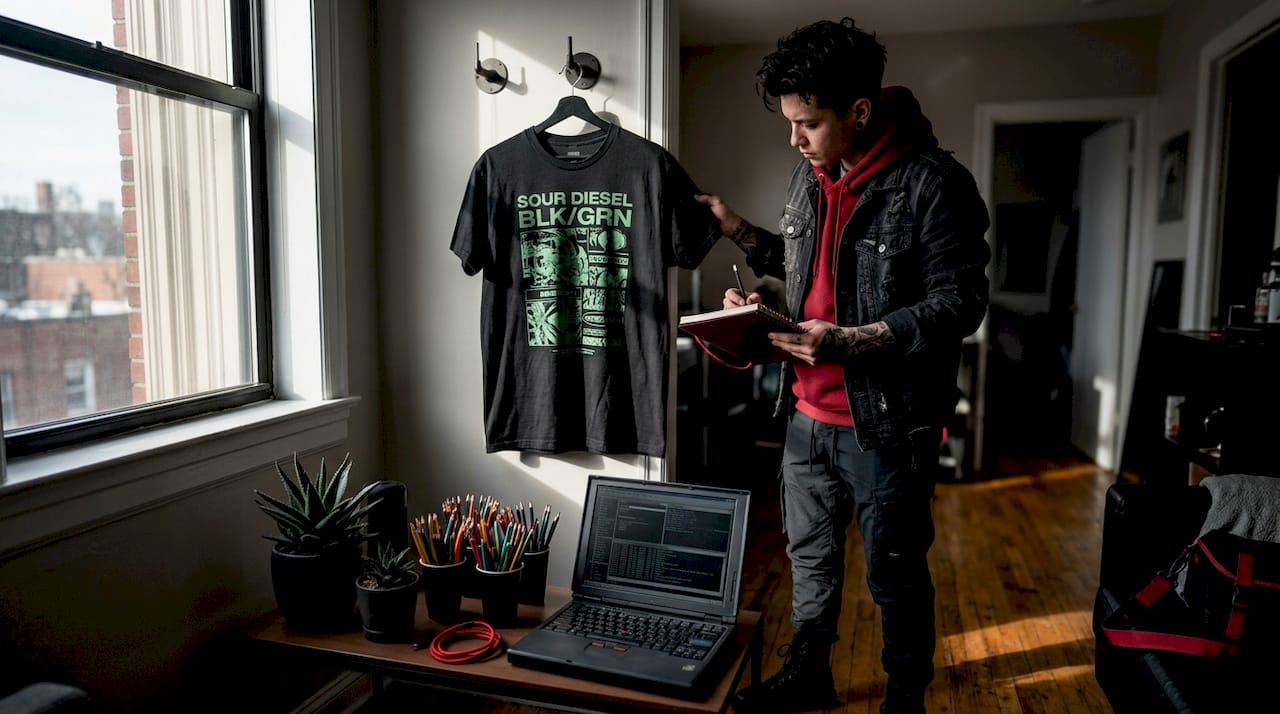
Remixing is encouraged here. Your story isn’t static, and your graphics shouldn’t be either. As your vibe evolves, your wardrobe should reflect that shift.
Collabs, icons, and legends: Graphics as cultural currency
When graphics move beyond individual expression into collaboration territory, something bigger happens. They become cultural currency. Shared symbols that carry the weight of multiple identities, histories, and communities at once.
Collaborations like Supreme x Nike and Nike x Cactus Plant Flea Market show how fusing two distinct visual identities creates something neither brand could produce alone. In cannabis culture, Death Row’s branding revival is a masterclass in using legacy iconography to preserve heritage while reaching a new generation.
| Collab type | Identity impact | Cultural longevity | Hype factor |
|---|---|---|---|
| Brand x Artist | Deep personal resonance | High | Very high |
| Legacy revival (Death Row) | Heritage and nostalgia | Very high | High |
| Structural/design-forward (Issey Miyake) | Conceptual, niche appeal | Very high | Moderate |
| Limited drop collab | Exclusivity, FOMO | Moderate | Extremely high |
| Community-driven collab | Tribal identity, loyalty | High | Moderate |
The lesson here is that graphics with a story behind them carry more weight than graphics designed purely for aesthetics. When you wear something that references a real cultural moment, a real artist, or a real legacy, you’re borrowing that story and adding it to your own.
Pro Tip: Look for pieces with artist signatures, strain references, or heritage nods. These details add layers of meaning that pay off in conversations and connections over time. The O.G. KUSH Snapback Hat is a clean example of how a single reference point can carry a full cultural conversation. Philosopher Stoner builds this kind of depth into every drop.
How to choose graphics that reflect your authentic self
All the data and cultural context in the world won’t help if you’re picking graphics based on what’s trending instead of what’s true to you. Here’s a practical process for choosing graphics that actually represent your story.
- Ask what the graphic makes you feel first. Not what others will think. Not what’s hot right now. Your gut reaction is the most honest data point you have.
- Identify the motifs and symbols that sync with your actual beliefs. If activism is core to your identity, look for designs that carry that energy. If philosophy and depth are your thing, text-heavy or conceptual graphics will hit harder for you.
- Use the color data intentionally. Revisit the table from the earlier section. Match your color choices to the emotional message you want to send, not just what looks good in the mirror.
- Balance your wardrobe. One or two graphic-heavy statement pieces, a few minimalist designs with subtle meaning, and at least one versatile layering piece. This gives you range without losing your identity signal.
- Remix and evolve. Your style should grow with you. Don’t lock yourself into a single aesthetic. The Canna Plaid Button Shirt is a perfect example of a piece that bridges bold cultural reference with versatile, everyday wearability.
Graphics evoke genuine confidence when they align with your real identity. That confidence is visible. People can feel it. And that’s the difference between wearing a graphic and owning it.
Pro Tip: Remix classic icons with subtle twists. Take a familiar motif and pair it with an unexpected colorway or silhouette. That tension between recognition and surprise is where the most memorable fits live.
Why being intentional with graphics changes the game
Here’s what most style guides won’t tell you: chasing trends in graphics is a losing game. Not because trends are bad, but because trend-driven choices always feel slightly off. Like you’re wearing someone else’s story.
The most powerful fits we’ve seen in this scene come from people who made deliberate choices. They picked a graphic because it meant something specific to them, not because it was everywhere on social media that week. And that intentionality shows. It creates a kind of gravity that pulls people in and starts real conversations.
Mainstream fashion advice treats graphics as a styling variable, something to swap in and out based on the season. But in streetwear and cannabis culture, graphics are cumulative. Each piece you add to your rotation builds a visual language that becomes recognizable over time. Your regulars start to understand your aesthetic. Your crew starts to see your evolution. That’s community built through clothing.
The uncomfortable truth is that most people never get to that level because they’re too busy reacting to what’s hot. Being intentional means slowing down, knowing your own story, and choosing graphics that add a new chapter instead of just echoing what’s already been said. Curate with purpose, remix with confidence, and let your wardrobe evolve as your culture and identity shift.
Ready to express your identity? Shop unique graphics now
Everything we’ve covered points to one thing: your graphics should work as hard as you do. They should signal your tribe, carry your story, and evolve with your identity over time.
Philosopher Stoner builds every piece with that intention. Whether you’re drawn to bold, strain-specific graphics that hit instantly or cleaner minimalist designs that reward a second look, the collection is built for people who wear what they identify with. Start with something that speaks to your current chapter. The High Philosopher Stoner Unisex T-shirt delivers graphic weight with philosophical depth, while the Philosopher Stoner Logo 2 Tee keeps it clean for everyday rotation. Your wardrobe is your story. Make it say something real.
Frequently asked questions
Are graphics or colors more important for signaling identity?
Both play a role, but graphics set the core message while colors fine-tune emotion and trust. Color in graphics is critical for driving trust and excitement, but the graphic itself carries the identity signal.
Can minimalist apparel graphics still express personal identity?
Yes, minimalist designs build long-term loyalty by allowing subtle, layered identity cues that reward people who look closer. Minimalist graphics outperform bold designs for sustained wardrobe attachment.
What do limited graphic drops mean for self-expression?
Limited runs create exclusivity and FOMO, which deepens the emotional bond between the wearer and the piece. Scarcity in limited drops measurably increases emotional attachment to clothing.
How do brand collaborations impact streetwear identity?
Collaborations blend the stories of multiple brands or artists, amplifying both personal and cultural identity signals in a single piece. Collaborations amplify identity through artist integrations and shared cultural heritage.
Is it better to follow trends or choose graphics with personal meaning?
Choosing graphics with personal meaning consistently produces more authentic and memorable style than chasing what’s trending. Trend-driven choices fade fast. Intentional ones build a wardrobe with real staying power.


