


Psychedelic streetwear gets dismissed as tie-dye and nostalgia. That’s the wrong read. What’s actually happening is a collision between urban fashion culture, cannabis aesthetics, and visual art that produces something genuinely new. The people wearing it aren’t chasing a throwback. They’re making a statement about how they see the world, what they value, and who they roll with. If you’ve ever stood in front of a rack of trippy tees and felt something but couldn’t explain it, this guide breaks down exactly what you’re looking at, where it comes from, and how to wear it without looking like you raided a festival lost and found.
Table of Contents
- Defining psychedelic streetwear
- Psychedelic motifs and cannabis culture influences
- Bold versus subtle: Style variations and innovation
- How to wear psychedelic streetwear with confidence
- Why psychedelic streetwear is more than a fashion statement
- Explore trippy streetwear with Philosopher Stoner
- Frequently asked questions
Key Takeaways
| Point | Details |
|---|---|
| Core definition | Psychedelic streetwear fuses vivid art, cannabis culture, and modern fashion into wearable self-expression. |
| Signature motifs | Mushrooms, smoke, and trippy patterns are central, often referencing a ‘high’ sensation without promoting use. |
| Style spectrum | Options range from bold festival looks to subtle prints suitable for daily wear. |
| Practical styling | Integrate psychedelic pieces gradually by starting with one statement shirt or accessory. |
Defining psychedelic streetwear
Psychedelic streetwear is a genre, not a gimmick. It pulls from two distinct worlds: the counterculture visual language of the 1960s and 70s, and the urban, attitude-driven silhouettes of modern streetwear. The result is clothing that feels simultaneously rebellious and current. Think oversized hoodies covered in swirling smoke patterns, tees with third-eye graphics, or caps embroidered with stylized mushroom imagery. It’s not costume. It’s identity.
The genre has roots in the same underground art scenes that produced skateboarding culture and hip-hop fashion. Psychedelic art, with its warped geometry and impossible colors, was always a form of resistance. When that visual language merged with streetwear’s obsession with authenticity and subculture credibility, something genuinely compelling emerged. Today, psychedelic streetwear culture sits at the intersection of music festivals, cannabis communities, and digital art movements.
What defines the genre visually?
- Oversized silhouettes with all-over print or large graphic placement
- Vibrant, often neon or earth-toned color palettes
- Motifs including mushrooms, smoke, celestial symbols, and weed leaves
- Distorted typography and surreal illustration styles
- References to altered states, nature, and cosmic consciousness
One of the biggest misconceptions is that psychedelic streetwear is just about promoting drug use. That’s a surface reading. Cannabis-inspired apparel frequently blends motifs such as mushrooms, trippy patterns, and cultural references with cannabis symbols in modern streetwear silhouettes, but the emphasis is on aesthetic and attitude, not advocacy. Plenty of people wearing these pieces have never touched a substance in their lives. They’re drawn to the visual energy and the cultural belonging the clothes signal.
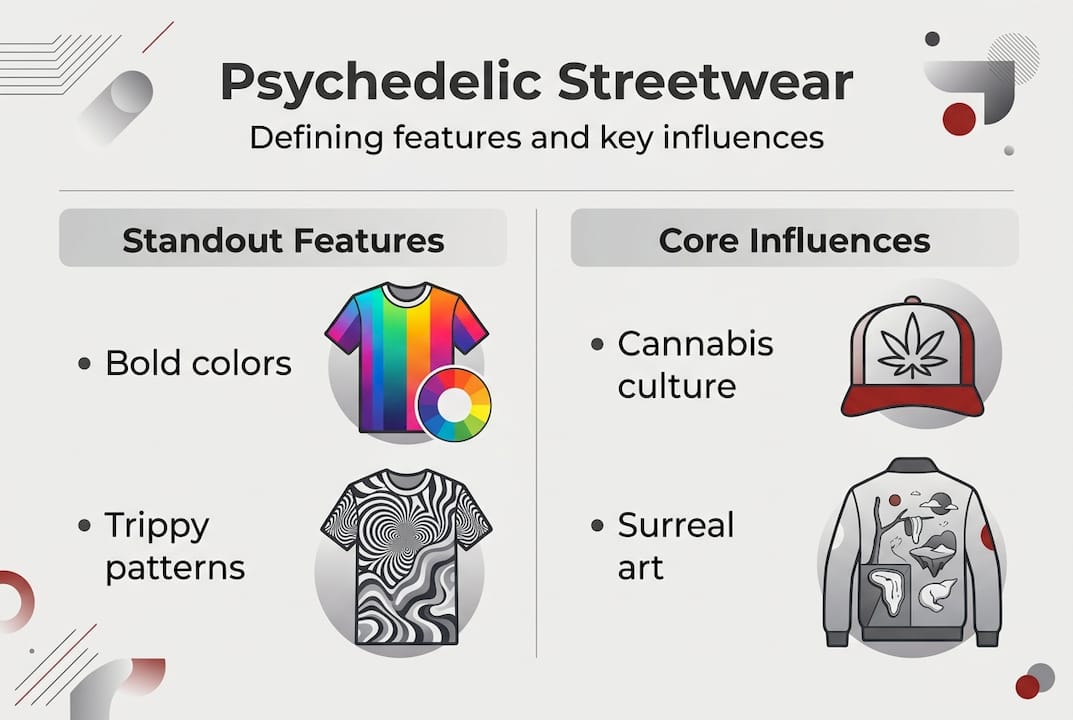
Here’s a quick breakdown of what separates psychedelic streetwear from adjacent genres:
| Feature | Psychedelic streetwear | Standard streetwear | Festival wear |
|---|---|---|---|
| Color palette | Vibrant, neon, or earthy | Neutral, monochrome | Maximalist, glitter |
| Core motifs | Mushrooms, smoke, cosmos | Logos, urban graphics | Flowers, boho patterns |
| Fit | Oversized, relaxed | Varies widely | Flowy, minimal |
| Cultural roots | Cannabis, art, music | Skate, hip-hop | Rave, hippie |
| Wearability | Daily to festival | Daily | Mostly event-specific |
Understanding this distinction matters because it changes how you shop, how you style, and how you talk about what you’re wearing. This isn’t a costume category. It’s a full fashion genre with its own rules, its own icons, and its own evolving language.
Psychedelic motifs and cannabis culture influences
The visual vocabulary of psychedelic streetwear is specific and intentional. Every symbol carries weight. Mushrooms aren’t just mushrooms. They reference altered perception, natural intelligence, and a kind of spiritual curiosity that runs through cannabis culture, underground music, and contemporary art. The third eye motif signals awareness beyond the obvious. Swirling smoke patterns evoke the ritual of the session, the pause, the breath. These aren’t random choices.
Cannabis culture is a major driver of the genre’s evolution. The community has always had a strong DIY aesthetic rooted in humor, irreverence, and genuine creativity. That energy translates directly into clothing. Designs evoke ‘high’ sensations, often drawing on mushrooms, “weed demons,” smoke imagery, and other cannabis-adjacent cues without crossing into explicit substance promotion. The goal is vibe, not instruction.
Core motifs you’ll see repeatedly:
- Mushrooms: Representing altered states, natural wisdom, and psychedelic curiosity
- Third eye: Awareness, expanded perception, seeing beyond the surface
- Smiley faces: Irony, joy, and a nod to rave and acid house culture
- Smoke patterns: The ritual of cannabis culture, relaxation, and community
- Stylized weed leaves: Cultural identity without being heavy-handed
- Cosmic imagery: Stars, planets, and galaxies suggesting infinite possibility
Some brands lean into the cannabis connection more directly. Others use cannabis-inspired motifs as a starting point for something more abstract. Four2wenty, KingCoApparels, OhighO, and narcotica each approach the genre differently. Four2wenty goes bold with direct references. OhighO balances humor with clean graphic design. narcotica keeps things more underground and art-forward. The range is wide.
Pro Tip: When evaluating a brand’s psychedelic streetwear, look at how the motifs are used, not just what they are. A mushroom rendered with genuine artistic intention reads completely differently from a clip-art mushroom slapped on a blank tee. Craft matters.
Here’s how some of the key brand approaches compare:
| Brand | Motif style | Cannabis reference level | Wearability |
|---|---|---|---|
| Four2wenty | Direct, bold | High | Festival to casual |
| OhighO | Humorous, clean | Medium | Daily wear |
| narcotica | Abstract, art-forward | Low to medium | Daily to gallery |
| KingCoApparels | Graphic, urban | Medium | Casual, streetwear |
The psychedelic references in streetwear that resonate most are the ones that feel earned. When a brand actually comes from the culture, the clothes show it. The motifs feel specific rather than generic. The color choices feel considered. That authenticity is what separates gear you actually want to wear from stuff that just looks like it’s trying.
Bold versus subtle: Style variations and innovation
Not everyone wants to walk into a room wearing a full-on all-over print mushroom explosion. That’s completely valid. The psychedelic streetwear genre has evolved to cover a wide spectrum, from pieces that announce themselves from across the room to items that only reveal their depth on close inspection. Both ends of that spectrum are legitimate expressions of the culture.
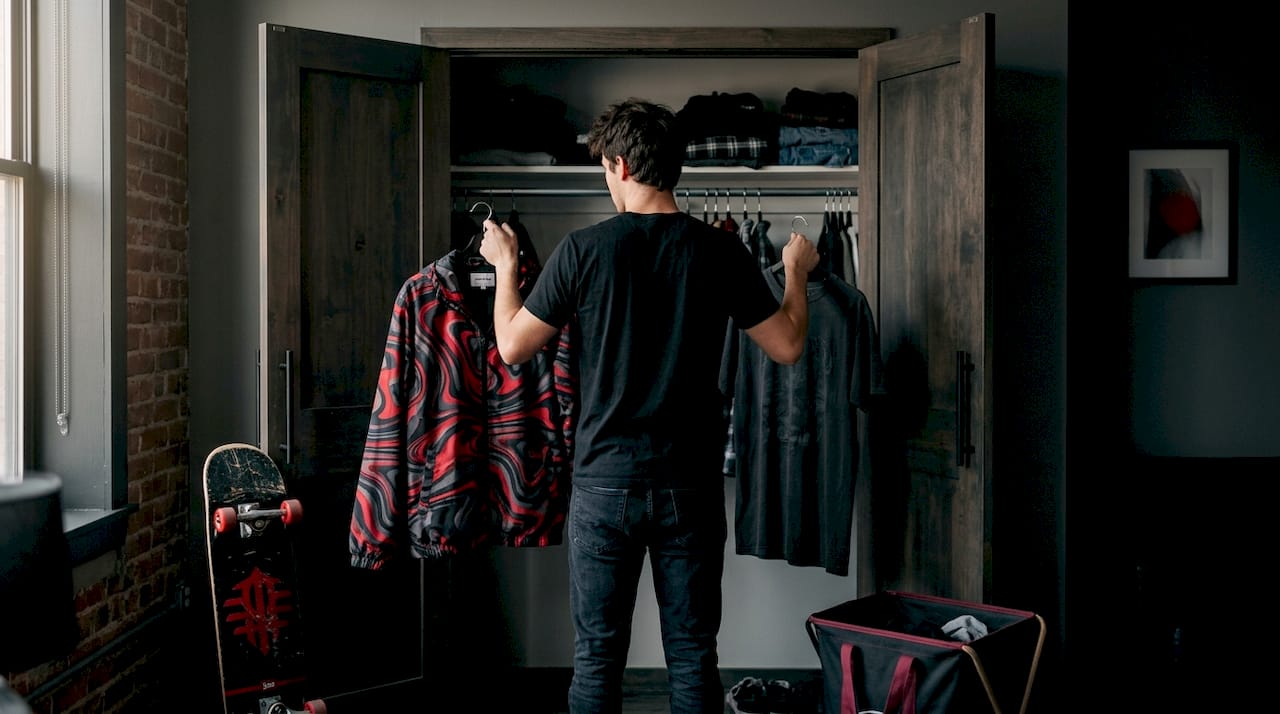
Bold styles are exactly what most people picture first. Oversized silhouettes, all-over prints that cover every inch of fabric, colors that almost vibrate. These pieces are built for festivals, concerts, and moments when you want to be fully present and fully visible. They’re conversation starters. They’re also genuinely fun to wear when the context calls for it.
Subtle styles are where things get interesting. Hidden UV-activated layers for subtlety and brands like Woke Up Weird (AI-generated patterns) versus Psylo (hand-drawn designs) represent the genre’s edge cases, showing just how sophisticated the approach has become. A shirt that looks clean and minimal under regular light but reveals a full psychedelic pattern under UV is a genuinely clever design solution. It lets you wear the culture without broadcasting it constantly.
Style spectrum breakdown:
- Festival bold: All-over prints, neon palettes, oversized fits, maximum visual impact
- Street casual: Single graphic placement, muted trippy colors, relaxed but not overwhelming
- Subtle daily: Minimal embroidery, hidden UV prints, earth tones with psychedelic details
- Art-forward: Abstract interpretations of motifs, gallery-worthy graphic work
“The most interesting psychedelic streetwear doesn’t just reference the culture. It embodies the mindset: curious, open, willing to look twice.”
Innovation in the genre is real and accelerating. AI-generated chaos patterns from brands like Woke Up Weird produce visuals that no human hand could create, with fractal complexity and unpredictable color relationships. On the opposite end, hand-drawn designs from brands like Psylo carry the warmth and imperfection of analog art. Both approaches are valid. Both are finding audiences.
Pro Tip: If you’re new to the genre and nervous about commitment, start with a subtle psychedelic shirt in a muted palette. You get the cultural connection without the full visual commitment. You can always go bolder once you know how it feels.
Innovative cannabis fashion is also expanding beyond tees and hoodies. Button shirts with psychedelic plaid patterns, accessories with subtle motif work, and outerwear with hidden graphic layers are all part of where the genre is heading. The range of entry points has never been wider.
How to wear psychedelic streetwear with confidence
Confidence in this genre comes from understanding, not from going all-out immediately. The people who look best in psychedelic streetwear aren’t always wearing the most extreme pieces. They’re wearing pieces that actually fit their personal style and the context they’re in. Here’s how to build that confidence practically.
Step-by-step approach for building your look:
- Start with one statement piece. A single trippy tee or a psychedelic snapback is enough to signal your connection to the culture without overwhelming your whole outfit.
- Build around neutrals. Black joggers, white sneakers, and a simple jacket let your statement piece breathe. The trippy element pops harder when it’s not competing with everything else.
- Match the occasion. A festival calls for bold, layered, maximalist energy. A casual hang calls for something more dialed back. Read the room and dress accordingly.
- Invest in fit. Psychedelic streetwear lives and dies by silhouette. An oversized tee should be intentionally oversized, not just too big. Know the difference.
- Let the piece tell you what it needs. Some graphics demand attention. Others are conversation pieces for people who look closely. Style accordingly.
Key styling principles:
- One bold piece per outfit, maximum, unless you’re going full festival mode
- Neutral footwear grounds a trippy outfit and keeps it from reading as costume
- Accessories can carry the psychedelic vibe without committing your whole outfit
- Earth tones and muted palettes work well as supporting colors for bright graphics
- Layering adds depth and lets you control how much of the piece shows
Brands like narcotica emphasize a balance between boldness and wearable, safer vibes for all-day outfits, and that principle applies broadly. The goal is to feel like yourself, not like you’re wearing a costume someone else designed for a different person.
A unique psychedelic accessory like a strain-named snapback can anchor an otherwise simple outfit and signal your cultural literacy without requiring you to go head-to-toe in trippy prints. Accessories are underrated entry points into the genre.
The most important rule: wear what you actually like. Psychedelic streetwear is a genre built on authenticity. If you’re wearing something because you think it’s what you’re supposed to wear, it’ll show. If you’re wearing it because it genuinely speaks to how you see the world, that’ll show too.
Why psychedelic streetwear is more than a fashion statement
Here’s the take most trend roundups skip: psychedelic streetwear isn’t really about clothes. It’s about a way of moving through the world. The people who gravitate toward this genre tend to share certain qualities. Curiosity. A willingness to look at things from angles most people don’t bother with. A comfort with being misunderstood by people who aren’t paying attention.
The blending of cannabis culture, music, and visual art in streetwear reflects something real about how identity forms in 2026. You don’t fit into one box. You’re a person who thinks, who creates, who questions, and your wardrobe should reflect that complexity. Psychedelic streetwear gives you the visual language to do that.
It also celebrates inclusivity in a way that a lot of fashion doesn’t. The genre doesn’t care about your background, your income level, or your social status. It cares about your perspective. That’s rare. And it’s worth protecting as the genre grows and inevitably attracts more mainstream attention.
Exploring psychedelic culture deeper reveals that the most enduring pieces in this genre aren’t the ones that chased trends. They’re the ones that came from a genuine place. That’s the standard worth holding.
Explore trippy streetwear with Philosopher Stoner
For those who’ve been nodding along to everything in this guide, Philosopher Stoner Clothing is built for exactly this moment.
Every piece in the collection comes from a genuine place in cannabis culture and psychedelic aesthetics, not a marketing meeting. The Lit Philosopher Stoner shirt captures the strain-driven identity that defines the brand. The Sour Diesel Snapback is the kind of accessory that signals your cultural literacy without saying a word. If you’re ready to wear what you actually identify with, browse psychedelic streetwear and find the pieces that speak to your specific vibe. This is clothing for people who think deeper and move different.
Frequently asked questions
What’s the difference between psychedelic streetwear and regular streetwear?
Psychedelic streetwear uses trippy visuals and motifs like mushrooms, smoke patterns, and cannabis symbols, while regular streetwear typically sticks to urban, skate, or logo-driven aesthetics. The cultural roots and visual language are distinct.
Can you wear psychedelic streetwear every day?
Yes, many brands offer subtle styles designed for daily wear, including hidden UV layers and muted palettes that carry the vibe without demanding full festival energy. Start with one piece and build from there.
Are psychedelic clothes connected to drug use?
Not necessarily. While motifs can reference altered states, most brands use these designs for artistic and cultural expression rather than substance promotion. The vibe matters more than the literal reference.
What are some popular psychedelic streetwear brands?
Four2wenty, KingCoApparels, OhighO, and narcotica are among the most recognized names in the genre, each bringing a distinct approach to psychedelic streetwear design and cannabis-adjacent aesthetics.


